One Month Before A Heart Attack, Your Body Will Warn You Of These 7 Signs

Heart attacks remain a leading cause of mortality in the United States, often triggered by a combination of stress, poor dietary habits, and underlying health conditions. Identifying the early warning signs can be crucial for individuals seeking timely medical intervention, potentially saving lives in the process. Understanding what your body is trying to tell you one month before a heart attack can make all the difference. Here are seven critical symptoms to watch for.
1. Swollen Feet and Ankles

One common yet overlooked sign that may signal an impending heart attack is the swelling of the feet and ankles. This symptom can indicate congestive heart failure, where blood accumulates in the lower limbs due to insufficient heart function. If you notice unexplained swelling, it is time to consult with a healthcare professional.
2. Persistent Fatigue

Feeling unusually tired or fatigued, even after a full night’s sleep, can be a potential warning sign of heart problems. When arteries become narrowed, the heart struggles to pump sufficient blood throughout the body, leading to a state of fatigue. If this sensation persists for more than a few days, especially in conjunction with other symptoms, it’s essential to seek medical advice.
3. Shortness of Breath

Another critical indicator to consider is shortness of breath. As blood flow decreases, the lungs may not receive enough oxygen, potentially causing difficulty in breathing. This symptom can arise during physical exertion or even while at rest. If this occurs frequently without an easy explanation, it is vital to talk with your doctor.
4. Unexplained Weakness

Muscle weakness can be a warning sign that demands attention. Poor blood circulation from cardiovascular issues can lead to feelings of weakness, elevating the risk of falls or injuries. If you experience unexpected muscle weakness over an extended period, especially if accompanied by other symptoms, consult a healthcare professional promptly.
5. Dizziness and Cold Sweats
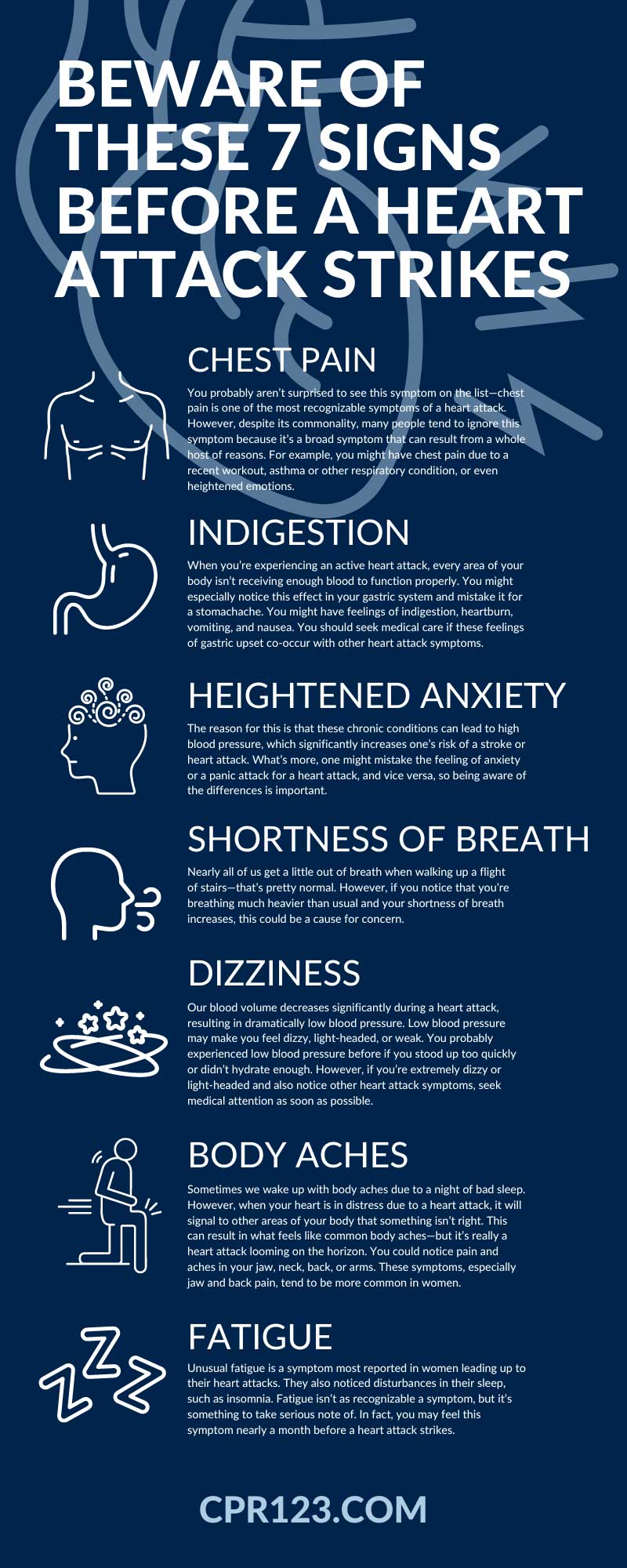
Feeling dizzy or experiencing cold sweats can often point to insufficient blood flow to the brain, which may result from cardiovascular complications. If you find yourself feeling faint or clammy without an apparent reason, it is advisable to make an appointment with a medical practitioner, as these signs can be indicative of an underlying heart issue.
6. Chest Pressure or Discomfort
One of the most commonly recognized signs of an impending heart attack is persistent chest pressure or discomfort. This sensation can manifest as a tightness or heaviness in the chest and should never be taken lightly. If you regularly experience chest pain or pressure, particularly if it radiates to the arms, jaw, or back, seek immediate medical attention.
7. Flu-like Symptoms
Surprisingly, some individuals may experience flu-like symptoms, such as nausea, vomiting, or even a general feeling of malaise before a heart attack occurs. These symptoms can be easily mistaken for a common cold or the flu, making them particularly insidious as signs of heart disease. If these symptoms arise without a clear cause, don’t hesitate to speak to a healthcare professional.
Recognizing these early warning signs is essential for preventing a heart attack. If you or someone you know is experiencing any of these symptoms, take them seriously. Early detection is a powerful tool in combating heart disease and can significantly enhance treatment outcomes. Stay proactive about your heart health and consult your doctor for regular check-ups and advice.